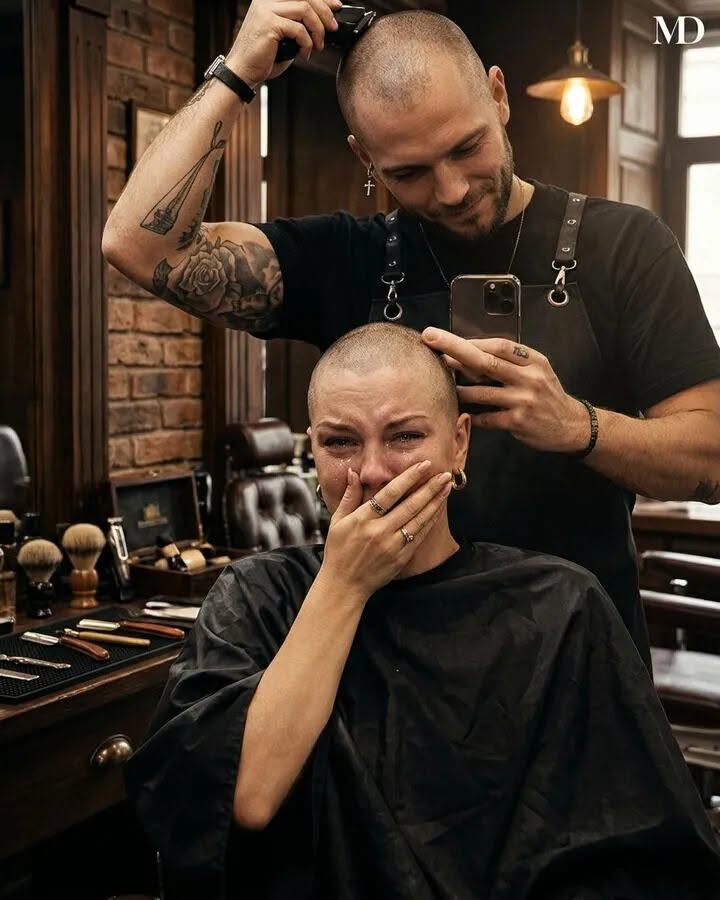
A young hairstylist, 25, had spent years building a modest career while struggling to cover rent and everyday expenses when, one afternoon, she did something she believed was an act of kindness for a wealthy customer. The customer had come in after chemotherapy caused much of her hair to fall out, and tearfully asked for her head to be shaved. The hairstylist did so — and then, in a gesture of profound solidarity, shaved her own head in the salon’s bathroom so the client would not feel alone.
She intended to show that the woman looked beautiful and to transform the painful moment into one of empathy, strength and dignity. But the next day, the customer’s husband stormed into the small salon, sharply dressed, with two intimidating men following him — one immediately positioned himself near the entrance. Shouting that she would pay for what she had done to his wife, he accused the hairstylist of mocking and humiliating her. She remained calm and explained the true meaning of her gesture: he had not listened to his wife before rushing in, fuelled by a misunderstanding and his own anger.
Then the wife spoke: she asked her husband whether he had contacted the property manager. His expression changed immediately — he realised then that he and his wife lived in the same building as the hairstylist, where she struggled to pay her rent each month. He knew the name, and had even filed complaints to the landlord about her. Her simple question exposed something he had overlooked, and reminded him of how his privileged position contrasted with her reality.
In guilt and shame, he eventually admitted he had been wrong and left the salon. A week later, the wife returned carrying gold scissors she had had inscribed — her late mother’s gold scissors, she said, handing them to the hairstylist. She treasured the expensive gift, but its true value, the story says, came from the friendship, dignity and empathy it represented — a reminder that a life of compassion and kindness is truly priceless.