The crying started before I reached Melissa’s porch.
It was late afternoon, heavy and breathless, the kind of heat that makes a whole street look half-asleep.
But her house sounded wide awake in the worst way.
Noah wasn’t making the ordinary little fussy noises babies make when they want a bottle or a nap.
He was screaming in broken bursts, like he’d been doing it so long his throat had gone raw.
I stood on the front step with a bag of groceries in one hand and diaper cream in the other and told myself there had to be a simple reason Melissa wasn’t answering her phone.
Then I rang the bell.I had been trying her since noon.
She’d missed a pediatric appointment that morning, and that alone had been enough to put a knot in my stomach.
Melissa was many things—impulsive, stubborn, defensive when she felt judged—but she usually made appointments when they involved other people seeing how she lived.
When she ignored six calls and three texts, I finally got in my truck and drove over.
I rang twice.
Knocked hard enough to shake the frame.
The crying never changed.
Through the front window I could see the television flashing blue in the dark living room, but no one crossed in front of it.No one shouted, no one said they were coming, no one even turned the volume down.
That was when I put my hand in my pocket and felt the spare key Melissa had given me after Noah was born.
“In case of emergencies,” she’d said back then with a crooked smile, as if handing me a key could stand in for asking for help.
I’d slid it into my wallet and hoped I would never need it.
Standing on her porch, listening to my grandson scream himself sick, I stopped waiting for permission.
The house smelled wrong the moment I stepped inside.
Sour formula.
Hot trash.
Laundry that had sat wet too long.
And underneath all of it, the unmistakable sharp, damp odor of a diaper that should have been changed hours ago.
My shoes stuck slightly to the kitchen floor.
The sink was full of bottles with crusted milk around the rims.
Takeout containers were piled beside an overflowing trash can.
A pink suitcase leaned against the couch, half-zipped, like someone had packed quickly and walked out without looking back.
I called Melissa’s name anyway.
Then Noah’s, which was ridiculous, because he answered me the only way he could—with another ragged scream from the back bedroom.
His nursery door was cracked open.
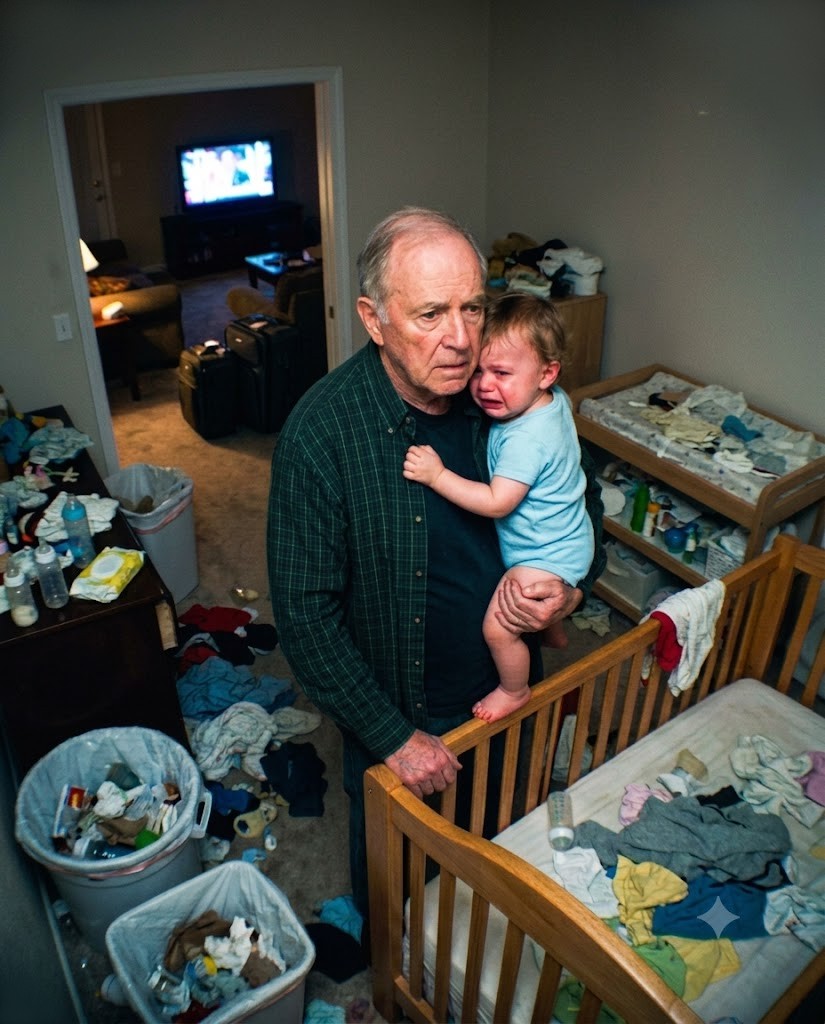
I pushed it wider and saw him standing in the crib, wobbling on unsteady little legs, face swollen red, cheeks wet, fingers wrapped around the rail so tight his hands were trembling.
His onesie was soaked.
His diaper sagged so low it looked painful.
When he saw me, he didn’t smile.
He cried harder, as if the sight of another human being gave him permission to finally fall apart.
I scooped him up, and he clung to my shirt with surprising strength.
He was hot from panic and exhaustion, not burning with fever but overheated from hours of crying.
He smelled like urine, spoiled milk, and sweat.
Underneath that was the faint clean scent of baby shampoo from some earlier
moment of care that now felt almost impossible to imagine.
Then I saw the note.
It was taped above the changing table in Melissa’s cheerful round handwriting: Went to the Bahamas with girlfriends – back next week.
Baby will be fine.
For a second my brain refused to accept the words.
They were too careless to belong to real life.
Bahamas.
Back next week.
Baby will be fine.
Like he was a slow cooker.
Like all he needed was to be left on low.
I laid Noah on the changing table and started with the most urgent thing I could do.
The diaper tabs were stuck to his skin.
When I peeled them back, he screamed so hard his whole little body arched.
His thighs were rubbed raw, bright angry red.
I swallowed hard, cleaned him as gently as I could, and kept murmuring that I had him now.
Whether I was comforting him or myself, I couldn’t tell.
I found sealed formula in the pantry, dumped every spoiled bottle in the sink, washed one as fast as I could, and mixed a fresh one.
Noah grabbed for it with both hands and drank like he didn’t trust it would stay there.
Every few seconds he would pull away just to look at me, eyes wide and wet, as if making sure I was still in the room.
Then I called Melissa.
She answered on the fourth ring.
I heard wind first.
Then laughter.
Music.
Glasses clinking.
For one half-second I thought maybe I was mistaken, maybe she was at a restaurant, maybe she had stepped out and a neighbor was on the way.
Then she said, bright and casual, “Hey, Dad, what’s up?”
I asked where she was.
“The Bahamas,” she said.
“I left a note.”
I remember gripping the phone so hard my hand cramped.
“You left your son alone.”
She laughed, actually laughed, like I was being uptight over dirty dishes.
“Dad, relax.
He has formula.
He has diapers.
Shannon was supposed to check on him.
You always act like the world is ending.”
I looked down at Noah’s skin, at the room, at the note on the wall.
“How long has he been alone?”
Her tone changed from breezy to annoyed.
“Why are you being dramatic? I needed a break.”
I hung up.
I didn’t trust myself to say another word and still sound like a man talking to his daughter instead of a man standing over a cliff edge.
I called 911.
Then I called Child Protective Services.
Then, while Noah coughed from crying so hard he could barely catch his breath, I called 911 again to make sure someone understood this was a baby, alone, in immediate danger.
The officers arrived first, followed by paramedics.
One of the younger cops stepped into the nursery, looked at the note, and read it twice before taking out his phone to photograph everything.
The paramedic checked Noah over right there in my arms, then said, very quietly, that we were going to the hospital.
Quiet voices in moments like that are never a good sign.
At the emergency department they told me Noah was dehydrated, exhausted, and developing a severe diaper rash that was on the edge of becoming infected.
He would recover.
He had not stopped
eating.
He had not suffered irreversible harm.
But no one in that room used the word fine, and no one treated what happened like a misunderstanding.
A CPS caseworker met me beside the hospital bed while Noah dozed after a bottle.
She asked me when I had last seen Melissa, whether there was another parent involved, whether Noah had somewhere safe to stay if she obtained an emergency removal order.
I answered everything as steadily as I could.
When I said I could take him, her shoulders loosened by an inch.
By that evening the detective assigned to the case had already called the friend Melissa claimed was checking in.
Shannon had not agreed to babysit.
She had not agreed to stop by.
According to her, Melissa had sent a vague text about needing space and posted airport selfies an hour later.
Another neighbor told police she had heard the baby crying on and off since early that morning and assumed Melissa was home letting him fuss.
That night Noah slept on my chest in the recliner because every time I tried to lay him down, he woke up gasping and reaching for my shirt.
My house had not held a baby in decades.
By midnight my dining room table was covered with borrowed supplies, paperwork, and the contents of two frantic pharmacy runs.
At three in the morning I was heating a bottle with one hand and signing emergency kinship placement papers with the other.
Melissa called the next day, and this time there was no laughter.
She went straight to rage.
She said I had no right to humiliate her.
She said every mother needed time away.
She said I was punishing her because I had never approved of how she lived.
I let her talk until she ran out of breath, then I told her Noah was safe, the police had her note, CPS had opened a case, and she needed to stop thinking this was a family argument.
There was a silence long enough to feel physical.
Then she asked, in a flat voice, “You actually called them?”
“You left a baby in a crib and got on a plane,” I said.
“What did you think I was going to do?”
She hung up.
Over the next two days the tone of her messages changed every few hours.
First she blamed me.
Then Shannon.
Then the pressure of motherhood.
Then she promised she was coming straight home.
Then she accused me of trying to steal her son.
None of it changed the photographs or the hospital report or the travel records detectives had already pulled.
They knew exactly when she had boarded her flight, exactly when her phone left the country, and exactly how long Noah had likely been alone.
When her plane landed, detectives met her at the airport before she could get to baggage claim.
I wasn’t there for the first part.
I was at home bouncing Noah through another nap when Detective Ruiz called and asked whether I could come to the station later because CPS would be serving the emergency removal order and the investigator thought my presence might keep Melissa from pretending there was confusion about where Noah was going.
I found her in a gray interview room under fluorescent lights,
looking smaller than I had ever seen her and somehow still furious enough to vibrate.
Her sunglasses sat on the metal table beside a half-empty paper cup of water.
The note from the nursery had been sealed in plastic and placed in front of her like a mirror she didn’t want to look into.
At first she insisted she never meant to hurt him.
Then she said she thought Shannon would stop by.
Ruiz asked why she hadn’t waited for Shannon to confirm.
Melissa said she assumed it was fine.
He asked why she hadn’t told me.
She said I would have made a big deal out of it.
He asked why she left only a note if she believed the plan was safe.
She had no answer for that.
Then came the truth she had been trying to dress up as stress.
She said she was overwhelmed.
She said Noah never slept through the night, that she felt trapped, that all her friends were going on the trip and she couldn’t stand the idea of being the one left behind again.
She said she only meant to be gone a few days at first, that once she was there, extending it had seemed easier than coming back.
The CPS worker sitting beside Ruiz did not raise her voice.
She simply said, “Being overwhelmed explains why someone needs help.
It does not explain abandoning a child.” There was nothing cruel in the sentence.
That was what made it land so hard.
Melissa cried then, but even through the crying she kept reaching for a version of events that would make her seem unlucky instead of reckless.
She asked where Noah was.
She asked if he was asking for her.
She asked if I had told people.
She asked whether this could all be handled privately.
Every question was about the fallout, not about the hours he had stood in that crib screaming for someone who did not come.
The emergency custody hearing happened the following morning.
Family court is a strange place to break apart.
People whisper, fluorescent lights buzz, papers shuffle, and in the middle of all that ordinary noise a judge can change the shape of a child’s life in under ten minutes.
The hospital report was entered.
The photographs were entered.
The detective summarized the timeline.
Melissa’s attorney said she had made a terrible mistake under emotional strain.
The judge called it what it was: abandonment.
I was granted temporary emergency custody that day.
Melissa was ordered to have no unsupervised contact with Noah.
CPS set conditions—parenting classes, mental health evaluation, supervised visitation, home inspections, compliance with the criminal case.
She nodded through all of it like a person listening through water.
Bringing Noah home for good, even temporarily, was not a gentle transition.
He startled awake at the slightest sound.
He cried when I stepped out of sight, even to wash a bottle.
He ate like he was afraid meals could disappear.
I baby-proofed the den, moved my bedroom downstairs, bought a crib, and learned more about rashes, sleep regressions, and toddler grief than I ever expected to know at my age.
Healing, it turned out, was built from a hundred ordinary acts done on time.
Melissa’s first supervised visit took place at a county family
center with plastic toys, pale walls, and a one-way window no one pretended not to notice.
She arrived in a neat blouse and full makeup, looking like she believed presentation could outrun paperwork.
The second Noah saw her, he froze.
He did not run to her.
He did not smile.
He watched her the way children watch strangers who insist they are familiar.
When she reached for him too quickly, he buried his face in my shoulder.
That was the first time I saw real pain cross her face, not fear for herself, not humiliation, but pain.
It lasted maybe three seconds.
Then it hardened into defensiveness again.
She said I had turned him against her.
The visitation monitor wrote something down without reacting.
The criminal case moved slower.
There were continuances, evaluations, interviews, and more paperwork than I would have believed a single terrible choice could generate.
In the end Melissa accepted a plea to child neglect and endangerment charges.
The judge ordered probation, mandatory parenting classes, counseling, and continued supervised visitation.
She avoided jail, which she told everyone proved the state knew she wasn’t a monster.
What it actually proved was that courts will often give a parent chances when a child still needs the possibility of one.
For a while I hoped those chances might wake something up in her.
Some weeks she did well.
She showed up on time.
She brought diapers.
She read Noah a book without checking her phone.
Then a missed class would turn into two.
A visit would be canceled because she was sick, then because she was tired, then because a friend needed her.
Her apartment failed inspection.
She changed jobs twice.
Excuses multiplied faster than effort.
Noah, meanwhile, began to settle into life the way children do when the adults around them stop letting the floor move.
He slept through the night.
His skin healed.
He stopped crying every time I left the room.
He learned where the spoons were kept, which board book was his favorite, how to laugh from his stomach when I made ridiculous animal noises.
The first time he fell asleep in his crib without reaching through the slats for me, I stood in the doorway longer than I needed to and had to wipe my eyes before I went to bed.
Almost a year after the day I used that spare key, we were back in family court.
By then the emergency order had become a long temporary arrangement, and the court had to decide whether Noah would return to Melissa or remain with me under a guardianship order.
CPS recommended that he stay.
Melissa had completed some requirements, skipped others, and still had not built anything that looked remotely like stable parenting.
She cried during that hearing too, but there was less performance in it and more exhaustion.
Her attorney argued that she loved her son and deserved more time.
The CPS worker testified that love had never been the legal question before the court.
Safety was.
Consistency was.
Judgment was.
The judge granted me guardianship and kept Melissa on supervised visitation, with the possibility of future review only if she could sustain real change over time.
Outside the courthouse Melissa asked to speak to me alone.
I did not want to, but I
agreed because Noah was strapped into his stroller with a bag of snacks and no reason to hear adult wreckage up close.
She stood under the concrete overhang twisting a tissue between her fingers and asked, very quietly, whether I had ever believed she could be a good mother.
I told her the truth.
“I believed you could have asked for help.
I believed you could have stayed.
I believed you could have turned around before boarding that plane.”
She looked away and said, “I thought one week wouldn’t matter.”
That sentence hit me harder than the note had.
Not because it was crueler, but because it was smaller.
Smaller and truer.
All the disaster had fit inside that one thought: that one week, one trip, one choice, one baby left to cry himself hoarse, would somehow not matter.
I did not tell her I forgave her.
I did not tell her I never would.
Some things are too heavy to drag into a parking lot and settle before lunch.
I told her Noah was safe, that what happened next depended on what she did for once and not what she felt, and that every future chance she got would have to be earned in the slowest, least glamorous way possible.
When I unbuckled Noah from the stroller, he reached for me automatically, pressing his warm cheek into my shoulder like that was where the world made sense.
Melissa watched us with an expression I still cannot fully name.
Regret, maybe.
Shock.
Maybe the first clear look she had ever taken at the size of what she had thrown away.
I still think about that day whenever I use the old spare key, which now hangs inside my own kitchen drawer.
Maybe the biggest red flag was how often Melissa treated responsibility like something she could step in and out of depending on her mood.
Maybe I should have seen the cliff sooner.
Maybe one day Noah will ask where his mother was when he was small, and I will have to find words that tell the truth without making it his burden to carry.
What I know for certain is simpler than any courtroom language.
He cried.
I went in.
He needed someone, and I was there.
Everything that came after—police, judges, paperwork, anger, consequences—started with that.
And when I wonder whether I was too harsh, whether I ruined my daughter’s life by refusing to keep her secret, I remember the way Noah clung to my shirt and screamed when I tried to lay him down.
Then I stop wondering.
center with plastic toys, pale walls, and a one-way window no one pretended not to notice.
She arrived in a neat blouse and full makeup, looking like she believed presentation could outrun paperwork.
The second Noah saw her, he froze.
He did not run to her.
He did not smile.
He watched her the way children watch strangers who insist they are familiar.
When she reached for him too quickly, he buried his face in my shoulder.
That was the first time I saw real pain cross her face, not fear for herself, not humiliation, but pain.
It lasted maybe three seconds.
Then it hardened into defensiveness again.
She said I had turned him against her.
The visitation monitor wrote something down without reacting.
The criminal case moved slower.
There were continuances, evaluations, interviews, and more paperwork than I would have believed a single terrible choice could generate.
In the end Melissa accepted a plea to child neglect and endangerment charges.
The judge ordered probation, mandatory parenting classes, counseling, and continued supervised visitation.
She avoided jail, which she told everyone proved the state knew she wasn’t a monster.
What it actually proved was that courts will often give a parent chances when a child still needs the possibility of one.
For a while I hoped those chances might wake something up in her.
Some weeks she did well.
She showed up on time.
She brought diapers.
She read Noah a book without checking her phone.
Then a missed class would turn into two.
A visit would be canceled because she was sick, then because she was tired, then because a friend needed her.
Her apartment failed inspection.
She changed jobs twice.
Excuses multiplied faster than effort.
Noah, meanwhile, began to settle into life the way children do when the adults around them stop letting the floor move.
He slept through the night.
His skin healed.
He stopped crying every time I left the room.
He learned where the spoons were kept, which board book was his favorite, how to laugh from his stomach when I made ridiculous animal noises.
The first time he fell asleep in his crib without reaching through the slats for me, I stood in the doorway longer than I needed to and had to wipe my eyes before I went to bed.
Almost a year after the day I used that spare key, we were back in family court.
By then the emergency order had become a long temporary arrangement, and the court had to decide whether Noah would return to Melissa or remain with me under a guardianship order.
CPS recommended that he stay.
Melissa had completed some requirements, skipped others, and still had not built anything that looked remotely like stable parenting.
She cried during that hearing too, but there was less performance in it and more exhaustion.
Her attorney argued that she loved her son and deserved more time.
The CPS worker testified that love had never been the legal question before the court.
Safety was.
Consistency was.
Judgment was.
The judge granted me guardianship and kept Melissa on supervised visitation, with the possibility of future review only if she could sustain real change over time.
Outside the courthouse Melissa asked to speak to me alone.
I did not want to, but I
agreed because Noah was strapped into his stroller with a bag of snacks and no reason to hear adult wreckage up close.
She stood under the concrete overhang twisting a tissue between her fingers and asked, very quietly, whether I had ever believed she could be a good mother.
I told her the truth.
“I believed you could have asked for help.
I believed you could have stayed.
I believed you could have turned around before boarding that plane.”
She looked away and said, “I thought one week wouldn’t matter.”
That sentence hit me harder than the note had.
Not because it was crueler, but because it was smaller.
Smaller and truer.
All the disaster had fit inside that one thought: that one week, one trip, one choice, one baby left to cry himself hoarse, would somehow not matter.
I did not tell her I forgave her.
I did not tell her I never would.
Some things are too heavy to drag into a parking lot and settle before lunch.
I told her Noah was safe, that what happened next depended on what she did for once and not what she felt, and that every future chance she got would have to be earned in the slowest, least glamorous way possible.
When I unbuckled Noah from the stroller, he reached for me automatically, pressing his warm cheek into my shoulder like that was where the world made sense.
Melissa watched us with an expression I still cannot fully name.
Regret, maybe.
Shock.
Maybe the first clear look she had ever taken at the size of what she had thrown away.
I still think about that day whenever I use the old spare key, which now hangs inside my own kitchen drawer.
Maybe the biggest red flag was how often Melissa treated responsibility like something she could step in and out of depending on her mood.
Maybe I should have seen the cliff sooner.
Maybe one day Noah will ask where his mother was when he was small, and I will have to find words that tell the truth without making it his burden to carry.
What I know for certain is simpler than any courtroom language.
He cried.
I went in.
He needed someone, and I was there.
Everything that came after—police, judges, paperwork, anger, consequences—started with that.
And when I wonder whether I was too harsh, whether I ruined my daughter’s life by refusing to keep her secret, I remember the way Noah clung to my shirt and screamed when I tried to lay him down.
Then I stop wondering.