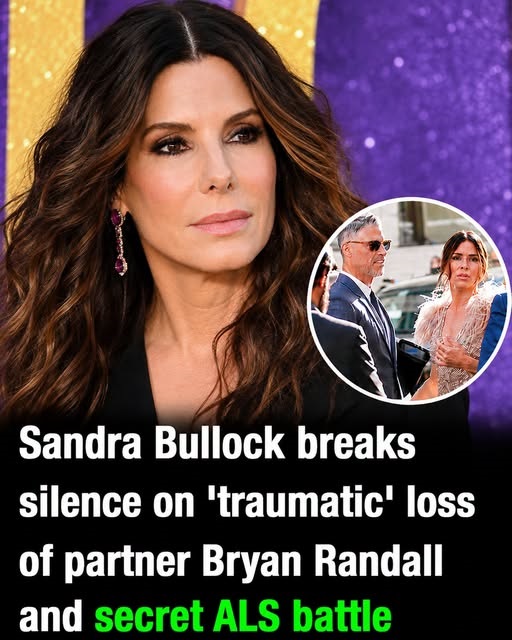
Sandra Bullock has spoken in unusually personal detail about the loss of her longtime partner, photographer Bryan Randall, nearly three years after his death. Randall died on August 5, 2023, at the age of 57 following a private battle with amyotrophic lateral sclerosis, commonly known as ALS. His family said at the time that he had lived with the disease for three years and had made an early decision not to discuss his condition publicly. Bullock respected that decision throughout his illness, even as it placed significant emotional pressure on her and the people closest to Randall.
In a 2026 appearance on the SmartLess podcast, the Academy Award-winning actress finally described what those private years had been like. Her comments offered a rare glimpse into a period of her life that she had deliberately kept away from public attention. Bullock and Randall’s relationship began in 2015 after he was hired as a photographer for her son Louis’ birthday celebration. Their relationship subsequently became public, and they remained together for approximately eight years until Randall’s death.
Although the couple never married, Bullock spoke warmly about their partnership during the years they were together. In a 2021 appearance on Red Table Talk, she famously described Randall as the “love of my life” while discussing their family. Their relationship also involved raising children together, and Randall became an important presence in Bullock’s household. That family dimension would later make his illness particularly difficult, because Bullock was not only caring for someone she loved but also helping her children understand dramatic changes occurring around them.
Randall’s family announced his death in August 2023 and disclosed publicly for the first time that he had been living with ALS. The family explained that Randall had chosen to keep his illness private and that those caring for him had worked to honor that choice. They also expressed deep gratitude toward the doctors and nurses who supported him during the progression of the disease. Bullock did not immediately give extensive public interviews about what she had experienced. Instead, she largely remained outside the spotlight as she dealt with the loss and focused on her family.
Her silence was therefore not an indication that Randall’s illness had played a small role in her life; as she would eventually explain, the reality was almost exactly the opposite. During her August 2026 appearance on SmartLess, hosted by Jason Bateman, Will Arnett and Sean Hayes, Bullock explained why so little had been known about Randall’s illness. She said Randall had specifically asked her not to share his diagnosis. Bullock understood his reasons and chose to honor his wishes, but maintaining that privacy had consequences for her own emotional life.
She explained that for a period she could not even tell some close friends what her family was experiencing. According to Bullock, her sister was initially among the very few people who knew. The responsibility of protecting Randall’s privacy therefore meant that Bullock was dealing with an extraordinarily difficult situation without being able to discuss it freely with the people who might normally have supported her. The circumstances became even more complicated because Randall’s illness overlapped with the COVID-19 pandemic.
Families around the world were already dealing with isolation, uncertainty and major disruptions to everyday life. Inside Bullock’s household, those pressures existed alongside the demands created by a progressive neurological illness and her responsibilities as a mother. Bullock described that combination as an exceptionally dark period. She was trying to protect Randall’s privacy, coordinate his care and maintain stability for her children while much of normal life had been disrupted by the pandemic. Her account also illustrates why the public knew relatively little about what was happening: keeping the situation private was a deliberate commitment to Randall rather than simply an attempt by a celebrity to avoid attention.
ALS is a progressive neurodegenerative disease that affects nerve cells responsible for controlling voluntary muscle movement. As the disease progresses, people can lose the ability to move, speak, eat and eventually breathe independently, although the course and progression can differ from person to person. There is currently no cure for ALS, though treatments and supportive care can help manage symptoms and, in some cases, slow aspects of progression.
Bullock described Randall’s experience as involving repeated medical evaluations and milestones that forced the family to continually adjust to changing circumstances. Her comments were focused primarily on her experience as Randall’s partner and caregiver rather than presenting herself as a medical authority. The medical details surrounding ALS are important context for understanding why long-term caregiving can become physically and emotionally demanding.
Bullock also spoke about something sometimes experienced by families facing progressive or terminal illnesses: grief can begin before a person’s death. She said that she felt she had started grieving Randall approximately four years before he died because something within their relationship had changed as they navigated an extraordinarily difficult period.
She described feeling as though the person she knew had begun slipping away before his physical death. Importantly, Randall’s family publicly characterized his ALS battle as lasting three years, so Bullock’s reference to grieving four years earlier should not be interpreted as confirmation that he had received his diagnosis four years before his death. Instead, she was describing her own emotional experience and the gradual changes she perceived within their lives.
For Bullock, there was little opportunity to fully process those feelings while Randall was still alive because everyday responsibilities continued. Caring for someone with a progressive illness can involve appointments, medical equipment, caregivers, treatment decisions and constant planning for what might happen next. Bullock said she was accustomed to confronting illness because of previous experiences within her own family. Her mother, Helga Meyer, died in 2000 after battling cancer, and Bullock said those experiences had made her capable of handling difficult medical circumstances. What made Randall’s situation especially complicated was that she was simultaneously thinking about her children and how the changes inside their home were affecting them.
Bullock’s daughter Laila had viewed Randall as a father figure, making his decline particularly meaningful within the family. Her son Louis was also aware that circumstances inside the household had changed. Bullock said she was careful not to allow her son to feel responsible for becoming the “man of the family” while he was still a child. She wanted him to remain a child rather than assuming an adult role because another adult in the household was seriously ill. That concern became even more significant during the pandemic, when children were already dealing with disrupted routines, school closures and uncertainty. Bullock’s priority, according to her account, was to shoulder the adult responsibilities herself while allowing her children as much stability as circumstances permitted.
The actress had already stepped away from acting before Randall’s death. In 2022, Bullock publicly discussed taking a break from her career and spending more time with her family. At that stage, the public did not know about Randall’s ALS diagnosis because the family continued respecting his wish for privacy. In retrospect, her decision to reduce her professional commitments occurred during an exceptionally demanding period in her personal life. Bullock’s later explanation provides additional context for why she needed distance from the relentless schedule associated with a major Hollywood career. She had spent decades working on films, promotional campaigns and public appearances, but during Randall’s illness, her priorities were increasingly centered on her home and family.
Following Randall’s death, Bullock continued to keep much of her grief private. Reports in the years afterward indicated that she spent considerable time with her children and focused on healing before making a larger professional return. Rather than immediately transforming Randall’s illness and death into a public story, she maintained the privacy that had characterized the final years of his life. When she eventually discussed the experience on SmartLess, she did so among hosts she already knew personally. Jason Bateman’s wife, Amanda Anka, is also part of Bullock’s circle of friends, which added another dimension to Bullock’s explanation of how difficult it had once been to keep Randall’s diagnosis confidential even from people close to her.
Her 2026 comments also show that grief does not necessarily begin or end at a clearly defined moment. For Bullock, Randall’s death in August 2023 was not the beginning of the emotional process. She had already experienced years of uncertainty, caregiving and gradual change before his death. Afterward, she was left with the task of understanding what had happened while continuing to raise her children and eventually rebuilding parts of her professional life. Bullock has made clear that she did not immediately have the emotional space to examine everything she had experienced while she was actively caring for Randall. Only with time was she able to look back on those years from a different perspective.
Three years after Randall’s death, Bullock has begun returning more visibly to her career and public life. Her return includes Practical Magic 2, which reunites her with Nicole Kidman after the actresses starred together in the original 1998 film. Her renewed professional activity does not erase the years she spent caring for Randall, but it represents another stage in her life following an extended period centered heavily on family responsibilities. Recent interviews suggest that Bullock is also paying greater attention to her own well-being after acknowledging how completely she had focused on caring for other people during the most difficult years.
Randall’s death also brought renewed public attention to ALS. Following the announcement in 2023, the ALS Association reported an increase in donations connected to the news of his death. His family had suggested donations to organizations including the ALS Association and Massachusetts General Hospital rather than focusing solely on traditional expressions of sympathy. Although Randall had chosen not to make his illness public while he was alive, the disclosure after his death consequently helped raise awareness of the disease and the enormous challenges faced by patients, families, medical professionals and caregivers.
Bullock’s decision to speak publicly now does not change Randall’s original choice to remain private during his illness. Instead, her account focuses largely on what caregiving, secrecy, parenthood and grief meant for her personally. She has avoided presenting herself as a spokesperson for every family affected by ALS, recognizing through her own story that each person’s circumstances can be different. What she has shared is the experience of loving someone whose health was deteriorating while trying to protect his dignity, respect his wishes and maintain a functioning home for two children.
Bryan Randall spent much of his professional life behind the camera as a photographer, and he largely avoided the level of celebrity attention that surrounded Bullock. Even after becoming the partner of one of Hollywood’s most recognizable actresses, he maintained a comparatively private life. That preference for privacy remained important when he became ill, and Bullock’s silence for years was part of honoring it. The fact that she can now discuss her own grief does not diminish that decision. Instead, her account helps explain why so much of their family’s experience remained unknown until long after Randall was gone.
Sandra Bullock’s reflections ultimately describe a complicated form of loss rather than a simple Hollywood tragedy. There were years of caregiving before the final goodbye, children whose emotional needs had to be protected, a pandemic that intensified isolation and a promise of privacy that limited whom she could turn to for support. Randall died in 2023, but Bullock has explained that her grieving process began well before that date and continued long afterward. Her decision to discuss those years publicly in 2026 offers context that audiences did not have while the events were actually unfolding. Above all, her story remains one of a family navigating serious illness privately, respecting the wishes of the person who was ill and gradually learning how to move forward after an enormous loss.