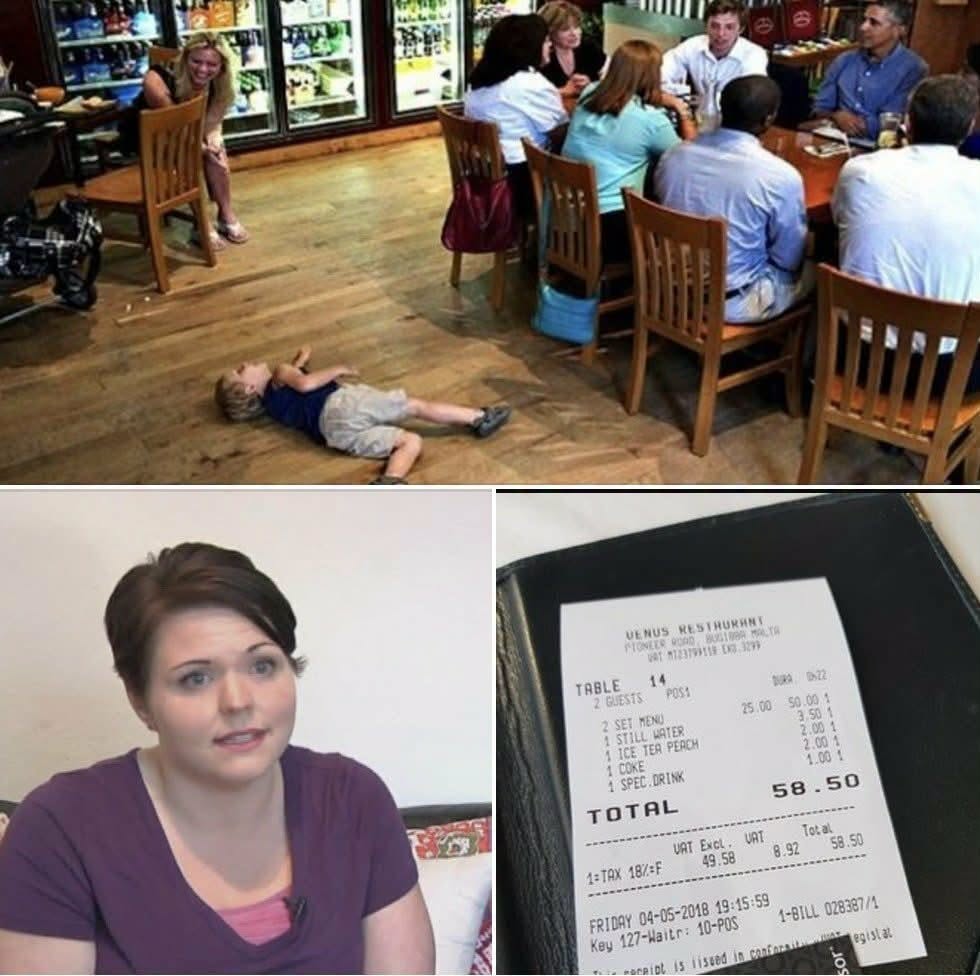
Restaurant Accused of Charging Parents a $50 “Bad Parenting” Fine — The Owner Finally Responds
Dining out is supposed to be a relaxing experience, but for parents with young children, it can sometimes become stressful. Keeping children entertained, making sure they stay seated, and preventing them from disturbing other guests can be challenging. When things get out of hand, tensions can rise between families, restaurant staff, and other diners.
But what happens when parents believe a restaurant has charged them extra because their children misbehaved?
That question sparked a heated online debate after a customer claimed that a restaurant in North Georgia had added a $50 penalty to their bill because of their children’s behavior.
The restaurant at the center of the controversy was Toccoa Riverside Restaurant, located near Blue Ridge, Georgia. Known for its riverside setting, the establishment became the subject of widespread discussion after the customer’s account circulated online.
According to the Reddit post, the customer was unhappy with the experience and alleged that the restaurant owner had personally informed them of the additional charge.
“The owner came out and told me he was adding $50 to my bill because of my children’s behavior,” the customer reportedly wrote, expressing disappointment with how the situation had been handled.
The claim quickly caught people’s attention. Some readers sympathized with the family, arguing that restaurants should be understanding when children become restless. Others took the opposite view, saying parents should ensure their children behave appropriately in public, particularly in places where other customers are trying to enjoy a meal.
The debate soon became bigger than one family’s restaurant visit.
Could a restaurant legitimately charge parents extra because their children were disruptive?
And where should the line be drawn between accommodating families and protecting the dining experience of other guests?
The restaurant owner responds
As the story gained attention, a reporter contacted the restaurant to ask about the allegation.
Owner Tim Richter offered a different perspective, disputing the suggestion that the restaurant had recently charged customers more than the amount on their bills because of their children’s behavior.
Richter explained that the restaurant had introduced a surcharge during the COVID-19 pandemic to help cover additional operating expenses. Restaurants across the country faced financial pressures during that period, including changing operating requirements and rising costs.
However, Richter said the pandemic-era surcharge did not mean the restaurant had recently been adding extra charges to customers’ bills in the manner described in the online post.
His response complicated the story. What had initially appeared to be a straightforward case of a restaurant penalizing parents became a dispute between a customer’s account and the owner’s explanation.
The allegation and the owner’s response raised an important distinction: a customer’s description of an experience is not necessarily the same as a confirmed restaurant policy.
Without independently verified details of the particular visit and bill, the reported $50 charge should not automatically be treated as proof that the restaurant maintains an official fine for poorly behaved children.
Why the story divided the internet
The controversy touched a nerve because almost everyone has experienced a difficult restaurant visit at some point.
For some diners, the issue is about consideration. They argue that children should not be allowed to run between tables, scream continuously, or interfere with other guests’ meals. Restaurant employees also deserve a safe and respectful working environment.
Parents who support more understanding, however, point out that children can become overwhelmed, tired, or frustrated in unfamiliar surroundings. They argue that a single difficult moment does not necessarily make someone a bad parent.
There is also a difference between a child occasionally becoming noisy and a situation in which disruptive behavior continues despite reasonable requests from restaurant staff.
Many people believe restaurants should address problems directly, explain their expectations, and give families an opportunity to resolve the situation before considering any additional measures.
Others argue that clearly communicated restaurant policies are essential so customers know what to expect before ordering.
Ultimately, the disagreement reflects a broader question about shared public spaces: how can businesses accommodate families while ensuring that every guest can enjoy their visit?
What should restaurants do when children misbehave?
Restaurants have to balance several responsibilities. They need to provide a pleasant environment, protect their employees, and respond fairly when customers’ behavior affects others.
Clear communication can help prevent misunderstandings. If a restaurant has a specific policy regarding disruptive behavior, customers should be able to learn about it before they are surprised by an unexpected charge.
Similarly, parents can help by supervising their children, responding when staff raise concerns, and recognizing when a child needs a break from the dining room.
Neither side benefits when a manageable situation turns into a public confrontation.
In cases involving disputed charges, customers can ask for an itemized bill and an explanation of any additional fee. Whether a particular charge is permissible depends on the circumstances and applicable law.
The bigger lesson behind the controversy
The Toccoa Riverside Restaurant story became a talking point because it combined two sensitive subjects: parenting and customer service.
Some people saw the alleged fine as an example of businesses losing patience with families. Others viewed the controversy as a reminder that parents have responsibilities when taking children into shared spaces.
But the owner’s response introduced an important qualification: the reported incident should not be confused with a verified, ongoing policy of charging parents a $50 penalty.
In the end, the story highlights the importance of fairness, transparency, and communication. Restaurants should explain their policies clearly, customers should be treated respectfully, and parents should make reasonable efforts to ensure their children do not seriously disrupt others.
What do you think? Should restaurants be allowed to impose clearly disclosed fees for serious, disruptive behavior, or should they handle these situations through conversation rather than extra charges?