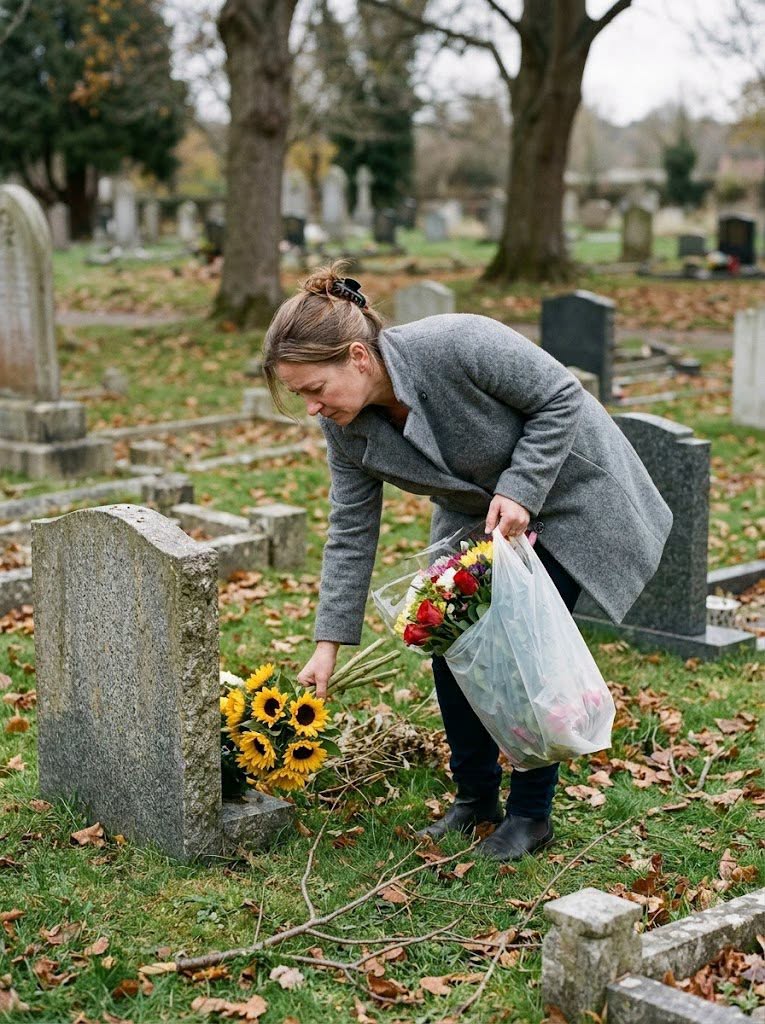
A grieving mother had placed fresh sunflowers on her son’s grave for what would have been his birthday, and when she returned to the cemetery the next morning, something stopped her in her tracks. A stranger in a worn coat was moving quietly from grave to grave, picking out the freshest flowers and slipping them into a shopping bag. When the woman reached for a sunflower from the mother’s own bouquet, the mother stepped forward and demanded it back.
The stranger handed the flower over at once and insisted she was not selling anything. Instead of explaining herself there among the graves, she asked the mother to follow her home, saying she could show her the reason. The mother agreed, and across the street the stranger led her into a small locked room filled with wooden keepsake boxes marked with names and dates, and a worktable covered with dried petals, moulds and clear casting resin.
There, the truth came out. The stranger had been taking a few stems from graves and preserving them inside clear resin memorials, which she said she meant to return to the families with a note. She had started years earlier, after losing her own daughter, by preserving flowers from her daughter’s grave first. The mother then realised the stranger had been quietly taking flowers, and even small keepsakes tucked into bouquets, from her son’s grave since not long after his funeral.
Angry at the intrusion but moved by the reason behind it, the mother made one thing clear: the taking without permission had to stop. Together they returned the collected flowers to the graves, and the cemetery office warned the stranger against removing flowers from graves again. In the end the mother asked her to finish her son’s resin memorial exactly as it was, with nothing more added, and to always ask a family’s permission first. She took the finished piece home and set it on her kitchen windowsill beside a fresh sunflower.