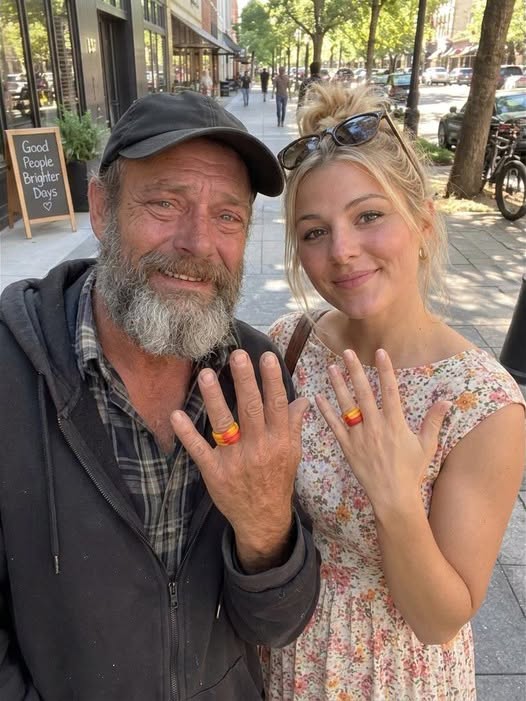
She married a man who had nothing — a man who had once been homeless, with no permanent home, no impressive investments and no estate to his name. People questioned her decision, wondering what kind of future could be built with someone who owned so little. But what he lacked in possessions, he made up for in character: thoughtful, stubborn and grateful, he showed his love in steady, everyday ways rather than grand gestures.
Their life together ended after a period of hospice care, during which he insisted on writing his own paperwork by hand, even as it became harder and harder for him to hold the pen. His farewell came at his funeral, where those who knew him gathered to remember a man whose wealth was never measured in money. She left believing the story was over — that everything he had wanted to say had already been said.
Then, six days after the funeral, a thick envelope appeared in the mailbox, tucked among bills and adverts, in his familiar uneven handwriting. It seemed he had arranged it during his final weeks, one last message prepared while he still could. She sat holding it, not yet knowing whether it contained a goodbye, a memory, or something entirely unexpected — and the story, like the envelope, remains unopened.
What stays with her is not the mystery of the letter but the belief behind it: that gratitude should be expressed rather than assumed. A person’s greatest contribution to a marriage, she reflects, is not measured by what they own, but by the care they show. He had nothing, and yet he gave her everything that mattered.