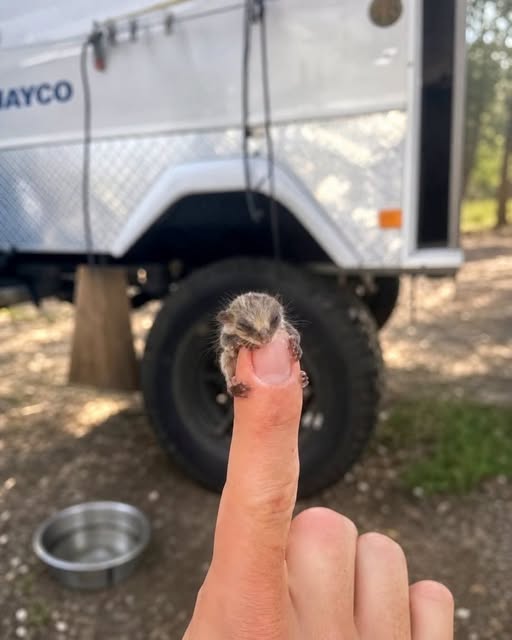
A Tiny Rescue With a Big Outcome
At first, the couple thought they were looking at a small bundle of fluff among the dirt and leaves. Then it moved, revealing a tiny animal lying alone and vulnerable on the ground. With no nest or parent nearby and the little creature barely able to move, they carefully approached and realized it needed help.
They gently picked it up and contacted wildlife rescuers, who identified it as a feathertail glider, a tiny nocturnal marsupial that normally spends its life in trees. Finding it on the ground during daylight was concerning, and the animal appeared weak and dehydrated. It was taken to a rehabilitation center, where rescuers focused on keeping it warm, hydrated, and stable.
Recovery came gradually, with small improvements such as a stronger grip, brighter alertness, and steadier breathing. Once its condition stabilized, rehabilitation could focus on helping it regain the skills needed to live independently, including climbing, feeding, and eventually gliding.
Days of careful observation followed. The little glider began becoming more active, responding to its surroundings and showing the instincts that would eventually allow it to return to the wild. For rescuers, every small improvement was a sign that the fragile animal had not given up.
The goal was never simply to keep it alive—it was to give it the chance to return to the life it was meant to have. If rehabilitation continued successfully, the tiny glider could eventually be released into suitable woodland, where it could climb among the trees instead of struggling alone on the ground.
Its story is a reminder that wildlife rescues do not always begin with dramatic discoveries. Sometimes, they begin with someone noticing something almost invisible and deciding not to walk past.
What looked like a tiny bundle of fluff became a life worth saving—and a powerful reminder that even the smallest act of kindness can lead to a very big outcome.