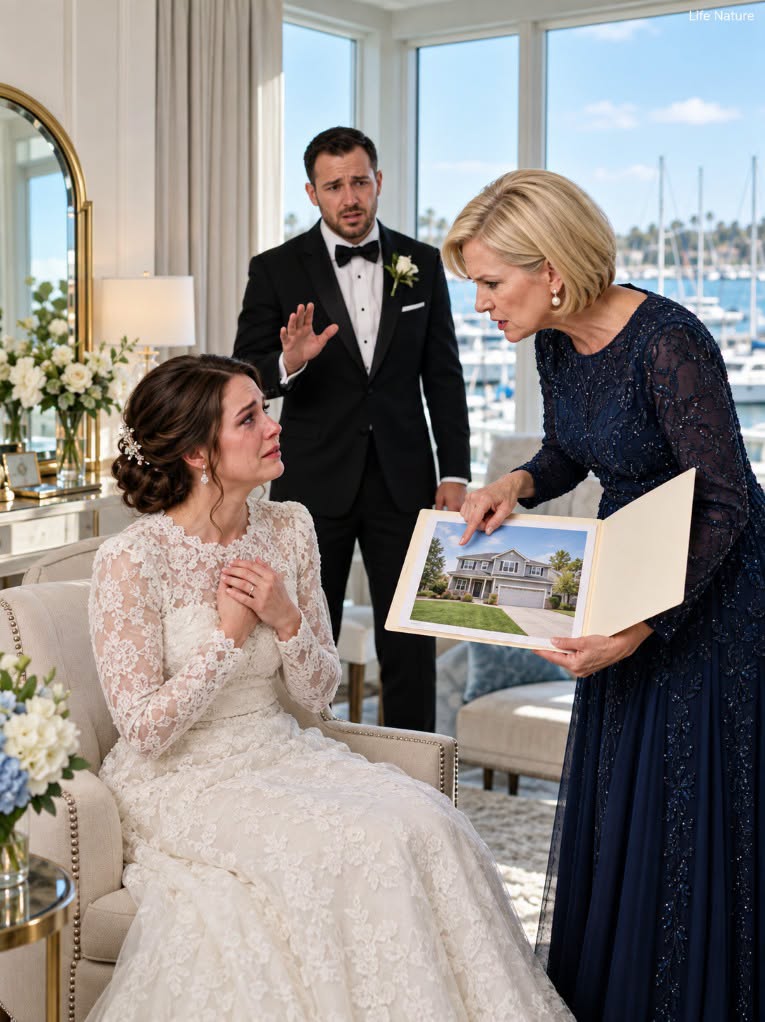
Twenty-three minutes before I was supposed to walk down the aisle, Diane Mitchell placed a beige folder across my wedding dress. Downstairs, 180 guests were waiting while a string quartet played beside Lake Washington. Ryan, my fiancé, stood behind his mother in his tuxedo and avoided my eyes. Diane opened the folder to a $1.28 million Kirkland home and a financing plan showing that I was expected to contribute between $430,000 and $470,000. The money was supposed to come from selling the North Seattle house my late parents had left me. Then I asked Ryan the only question that mattered: “How long have you known?” His answer was quiet—one month.
That house was worth a little over $800,000, but to me it was where my mother’s hydrangeas still filled the backyard and my father’s unfinished trellis still stood. Ryan knew I had no plans to sell it. Yet he and Diane had toured the Kirkland property, calculated a mortgage, reviewed comparable sales, and discussed using my inheritance without first asking me. When I said again that I would not sell, Ryan told me we should not make a “forever decision” that day. Diane reminded me the ceremony was minutes away, while Ryan asked if we could simply “get through today.” That was when I realized the 180 people downstairs were not just guests—they were pressure they believed would keep me from walking away.
I looked at the engagement ring I had worn for eleven months and placed it directly on top of the paperwork showing my projected contribution. I told Ryan I was not canceling because of a house; I was canceling because he treated my boundaries as the beginning of a negotiation. Later, an attorney reviewing my parents’ estate confirmed that the property belonged solely to me and explained In the weeks that followed, Ryan apologized, returned Diane’s spare apartment key, and eventually began therapy. Diane later sent her own apology, though she still believed she had been encouraging the “responsible” financial choice. I moved into my parents’ house, repaired the garage door, finished my father’s trellis, painted rooms, hosted friends, and slowly stopped treating the place like a museum. Months later, I saw Ryan at a grocery store, and we spoke without anger or bitterness. I understood then that ending the wedding had not erased the four years we shared; it had simply prevented a pattern from becoming the foundation of a marriage. Diane had looked at my childhood home and seen an $800,000 asset. Ryan had seen a financial conversation that could wait. I saw something else: the moment I finally understood that loving someone did not require turning every boundary into a compromise.Book Venues
that moving inherited money into jointly owned property could make future finances more complicated in court. The discussion was never really about insurance, mortgage payments, investment strategy, or maximizing an estate. It was about whether major decisions in our marriage would truly belong to us. I asked for a microphone, faced the guests, and announced there would be no ceremony. I shared no private details and blamed no one publicly. Then I left the hotel and went straight to my parents’ house.